
EEC Static Display Aircraft Painting Service specializes in the on-site restoration of historic and military static display aircraft.
What You'll Learn About the Weightless Wonder KC-135 Aircraft
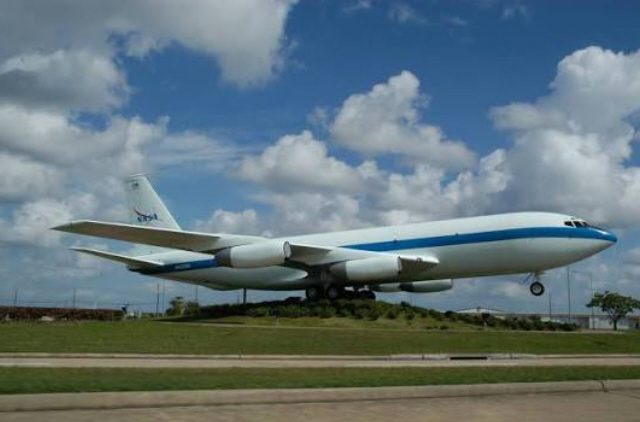
Imagine stepping inside a sleek aircraft, the hum of engines filling your ears, as you prepare for a flight that defies gravity itself. The weightless wonder KC-135 aircraft, more than just a military landmark, stands as a living testament to human ingenuity in aerospace and film. Its legacy stretches from training NASA astronauts for the impossible to revolutionizing how zero-gravity is shown on the big screen. Join us as we explore how this remarkable “gravity aircraft” soared beyond its initial mission, transformed aviation, and continues to captivate the imaginations of enthusiasts and innovators.
Displayed at Ellington Airport / Houston Spaceport
Discover the history and technical innovations of the weightless wonder KC-135 aircraft
Understand its dual legacy in both aerospace and cinematic history
Explore the impact of reduced gravity training on astronaut preparation
Learn how the weightless wonder KC-135 aircraft was central to film authenticity in Apollo 13
Aviation Legends: The History of the Weightless Wonder KC-135 Aircraft
From Air Force Refueling to Reduced Gravity Pioneering
The story of the weightless wonder KC-135 aircraft begins in the thick of the Cold War, when the United States Air Force needed a reliable tanker aircraft capable of refueling fighters and bombers mid-flight. Built on the robust Boeing 707 airframe, the KC-135, stationed at key air force bases, became the standard-bearer for the air mobility command post, ensuring global reach for strategic bombers and fighters. Its hallmark “flying boom” gave it unmatched reliability as a receiver aircraft feed, which saw intense use from Vietnam through the present day—hundreds still serve, maintained by both the air national guard and the Air Force.
However, the KC-135’s destiny would soon curve towards scientific marvel. NASA, always in search of innovative tools, saw potential far beyond refueling: the aircraft’s steady performance and spacious interior made it an ideal candidate for reduced gravity research. Nicknamed “Weightless Wonder” and designated as Weightless Wonder IV, it became a pivotal gravity aircraft. As a carrier aircraft, it was routinely used by agencies including the space agency and college students pursuing advanced research—especially experiments like the bolus experiment and studies of aerosol deposition in the lung.
How the KC-135 Became the Gravity Aircraft Known as Weightless Wonder IV
NASA quickly recognized the unique capabilities of the KC-135, renaming one of its variants the “Weightless Wonder”—eventually, the legendary Weightless Wonder IV. This converted tanker, based often out of Ellington Field near Houston, became a linchpin for astronaut preparation and cutting-edge aerospace research. By flying parabolic arcs—climbs and dives carefully calculated for microgravity—the aircraft delivered an experience no flight simulator could: about 30 seconds of genuine weightlessness per maneuver. Through these repeated arcs, astronauts learned to function in true zero gravity, scientists studied deposition in the lung and other physiological processes, and countless bolus experiments broadened our understanding of life sciences in space.
Notably, the aircraft’s persistent appearances in technical journals and its iconic flights over the Gulf of Mexico cemented its place in aviation folklore. Key names like Jeff Struthers and Chantal Darquenne are often connected to research on martian gravity and NASA’s parabolic flight programs. Thus, the KC-135’s transformation was more than a mere retrofit; it represented the shift from a tool of military might to an ambassador for scientific curiosity.
The Science Behind Reduced Gravity Flights
What Are Parabolic Flights and How Does the KC-135 Create Weightlessness?
The genius of the weightless wonder KC-135 aircraft lies in its use of parabolic flight—a series of carefully executed climbs and dives, or “parabolic arcs. ” The flight crew expertly guides the tanker through these arcs, each one producing a fleeting window of microgravity onboard. During the upward climb, the force of gravity intensifies momentarily, but at the crest and through the subsequent dive, all inside become delightfully weightless for around 20–30 seconds.
These unique conditions inside the gravity aircraft make it invaluable for more than just astronaut training. Scientists use these brief microgravity intervals to perform complex studies on biological, chemical, and physical processes—focusing, for example, on aerosol deposition in the lung to better understand how medicine or particles behave in zero-g. The KC-135’s scientific instrumentation and specialized interiors transform it into one of the world’s most versatile flying laboratories. The excitement among space agency researchers, college students, and even filmmakers is palpable on every parabolic arc.
Maintaining the KC-135’s specialized interiors and exterior finish is crucial for both operational safety and historical preservation. For a closer look at how expert teams approach the unique challenges of military aircraft painting services at Dover AFB, you can explore the techniques that keep these iconic planes looking and performing their best.
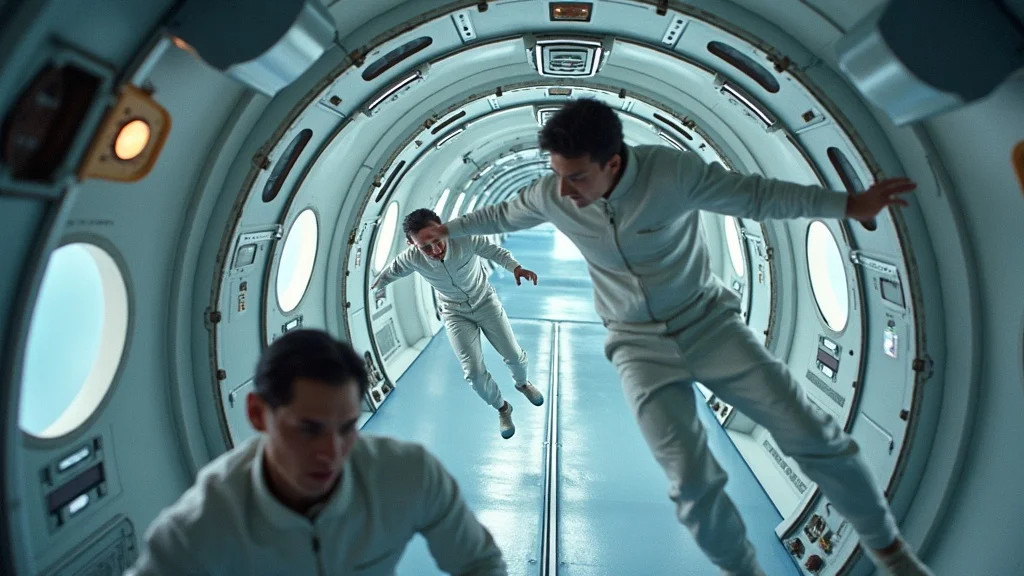
Astronaut Preparation: Training on the Weightless Wonder KC-135 Aircraft
For astronauts, nothing compares to experiencing true reduced gravity before heading to orbit. The weightless wonder KC-135 aircraft became central to NASA’s rigorous training regimen; legendary crews and trainees—often at Ellington Field—prepped by floating, tumbling, and adjusting to weightlessness in real time. These flights not only built physical familiarity, but mental readiness as well: learning to handle tools, manage experiments, and maintain composure when up is down and down is obsolete.
Beyond astronaut training, these missions propelled a vast body of scientific studies—ranging from deposition in the lung under different gravity levels to the bolus experiment evaluating medical inhalants. By opening this rare laboratory to students and professionals alike, the KC-135 bridged the gap between classroom theories and the practical demands of space. Its flights continue to inform research at NASA centers such as the research center in Cleveland, making it a beacon for aspiring space explorers everywhere.
Hollywood Takes Flight: The KC-135 in Apollo 13
Capturing Zero-Gravity Scenes with the Gravity Aircraft
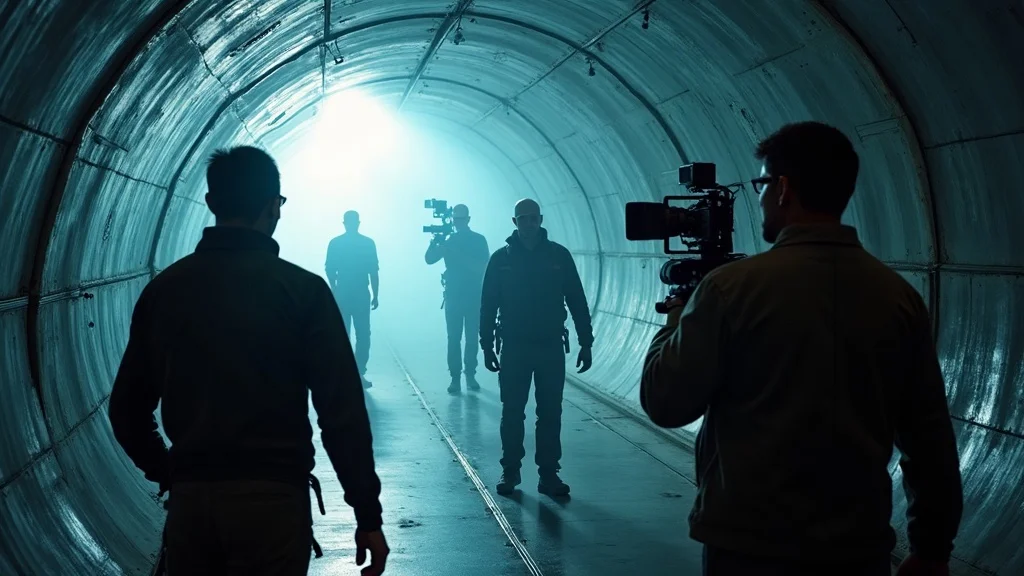
Hollywood’s desire for authenticity often leads to ambitious endeavors, but few are as impressive as the filming of Apollo 13. Instead of relying solely on computer graphics, director Ron Howard and the cast—including Tom Hanks—embarked on parabolic flights aboard the weightless wonder KC-135 aircraft to authentically film zero-gravity scenes. Every shot of floating actors, drifting objects, and cascading wires reflected the real strain, excitement, and unpredictability experienced by astronauts.
“There’s nothing like stepping inside the KC-135, feeling that moment when gravity surrenders its hold—it’s a sensation that defines awe in aviation.”
The commitment was extraordinary: the film crew performed hundreds of arcs, with each take capturing a new angle or maneuver. From camera operators adapting to zero-g, to makeup artists floating beside actors—all leaned on the aircraft’s design as a cinematic stage. The final result delivered a realism that resonated with viewers. The KC-135 thus entered a unique echelon: both a command post for scientific training and an essential cast member of a Hollywood blockbuster. Its legacy endures in every frame of Apollo 13, forever linking the worlds of aerospace and cinema.
Restoration and Legacy: Preserving the Weightless Wonder KC-135 Aircraft
Expert Craftsmanship: The Restoration Process
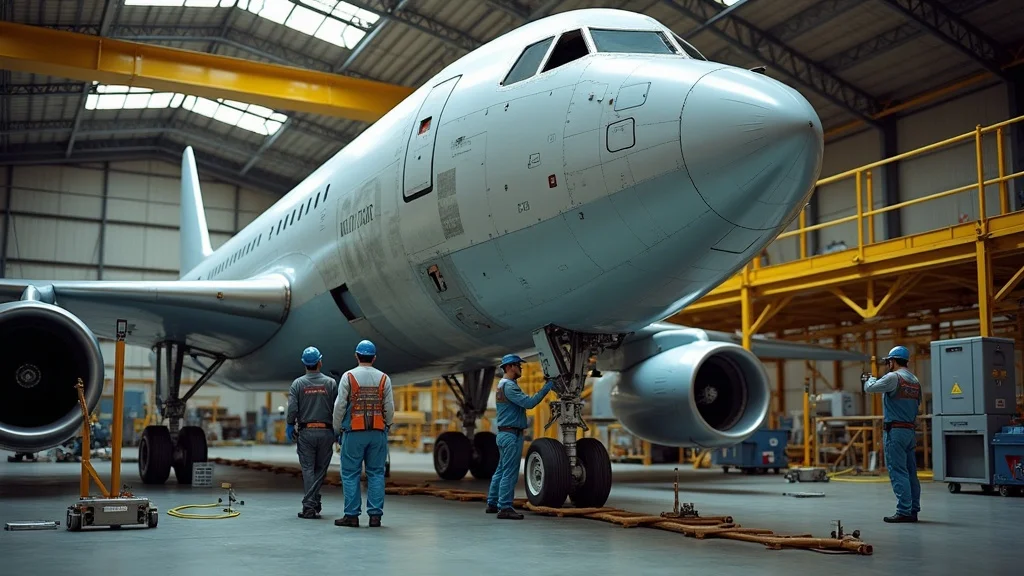
Restoring the weightless wonder KC-135 aircraft is a pursuit that combines art, science, and history. Specialists—many of whom are veterans of air national guard or have experience as former flight crew—painstakingly inspect and repair every segment, from structural panels to intricate flight controls. The process involves stripping outdated equipment, installing museum-quality exhibits, and recreating the plane’s iconic scientific interiors. Preservationists reference original blueprints and even the “official website” archives, honoring its storied history as a NASA gravity aircraft, a refueling veteran, and a film icon.
Each component—whether a restored flying boom or repainted fuselage—demands both technical precision and heartfelt respect. Teams document every stage for public display, ensuring the future can experience every rivet and relay switch that made the KC-135 unique. Experts working under bright workshop lights bring to life not only a storied airframe, but an enduring source of inspiration for all who value innovation and determination.
A Living Piece of Aviation and Film History
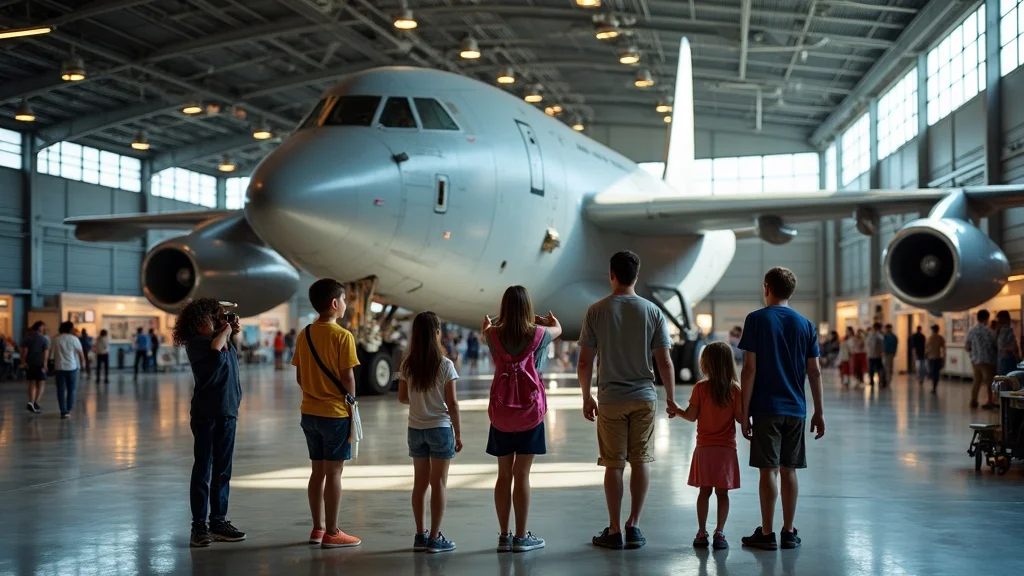
Today, the restored weightless wonder KC-135 aircraft stands proudly in aviation museums, its polished skin reflecting the aspirations of decades past. Guided tours offer visitors a glimpse into the world of reduced gravity: from original NASA equipment on display, to film props used in Apollo 13, each meticulously preserved artifact connects us to moments when ordinary boundaries fell away. Interactive stations share tales of pioneering astronauts, NASA researchers like Jeff Struthers and Chantal Darquenne, and the Air Force crews who wrote history on every flight.
As “living history,” the KC-135 continues to travel—via exhibits, educational outreach, and digital tours—spreading curiosity and honoring those who shaped both America’s aerospace leadership and Hollywood’s cinematic milestones.
Key Features of the Weightless Wonder KC-135 Aircraft
Specialized interior layouts for reduced gravity experiments
Instrumentation for precise flight arcs
Strong aerospace-grade structure adapted from Boeing 707/air force KC-135
Comparing the Weightless Wonder KC-135 Aircraft: Past and Present
| Feature | Original KC-135 | Restored Weightless Wonder KC-135 |
|---|---|---|
| Main Role | Aerial refueling | Zero-gravity simulation & historical exhibit |
| Famous Missions | USAF refueling, Vietnam | NASA astronaut training, Apollo 13 filming |
| Interior Configuration | Standard tanker | Scientific equipment and film rigs |
People Also Ask: The Weightless Wonder KC-135 Aircraft
How much is a KC-135 plane worth?
The value of a KC-135 aircraft depends on its condition, history, and current use, often influenced by both operational and collector angles.
Does Air Force One have sleeping quarters?
Yes, Air Force One is equipped with sleeping quarters, a medical suite, an office, and conference space for the President and select staff.
What is a KC-135 plane used for?
Primarily, the KC-135 serves as an aerial refueling tanker for the Air Force, but it has also been adapted for reduced gravity research and astronaut training by NASA.
How many KC-135s are still flying?
Several hundred KC-135s remain in operational US Air Force refueling squadrons, although numbers are gradually declining as newer models enter service.
Why the Weightless Wonder KC-135 Aircraft Still Inspires Aerospace Enthusiasts
“The legacy of the weightless wonder KC-135 aircraft is more than engineering—it’s about human ingenuity and the courage to reach beyond gravity’s bounds.”
Across air shows, museums, and educational programs, the presence of the weightless wonder KC-135 aircraft draws a new generation of dreamers. Families stand awestruck at its scale and storied panels; children capture selfies beside historic equipment used by NASA’s space agency. More than metal, this aircraft is a symbol of innovation—encouraging us to rethink the possible and push onward, beyond the pull of gravity.
Key Takeaways for Future Generations
The weightless wonder KC-135 aircraft bridged military, scientific, and cinematic frontiers.
Its legacy underscores the value of hands-on astronaut training in actual reduced gravity environments.
Preserving the aircraft’s story inspires curiosity and ambition in aerospace innovation.
FAQs
What is the difference between the weightless wonder KC-135 aircraft and a commercial Boeing 707?
While both share a common airframe, the weightless wonder KC-135 aircraft was modified for military refueling and later scientific research, including parabolic flights.
Can civilians experience zero gravity on the KC-135 aircraft today?
Access is highly restricted to official research or media projects; commercial zero-gravity flights exist but typically use specialized, non-military jets.
Connect with Us to Learn More About the Weightless Wonder KC-135 Aircraft
Have questions about the KC-135’s restoration or its role in history?
Call Us at 610 965 2262
Conclusion: The weightless wonder KC-135 aircraft endures as a symbol of aerospace excellence, inspiring young and old to dream, innovate, and reach higher. Its journey from refueling the world’s mightiest planes to unleashing the magic of weightlessness stands as a testament to humanity’s boundless curiosity and resolve.
If you’re fascinated by the intersection of aviation history and modern preservation, you’ll appreciate how comprehensive solutions in military aircraft painting projects contribute to the longevity and visual impact of legendary aircraft like the KC-135. Dive deeper into the world of expert restoration and discover how these efforts ensure that aerospace icons continue to inspire future generations and remain vibrant centerpieces in museums and airfields around the country.